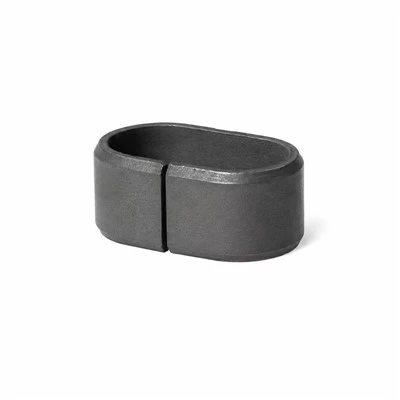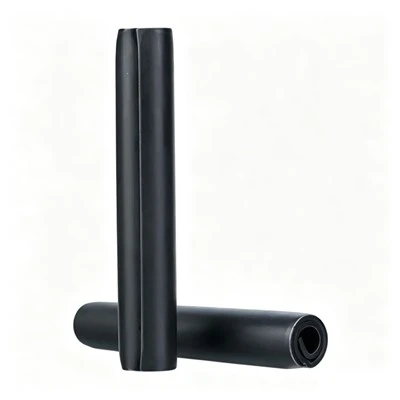

Press-in Compression Limiter Specifications
| Parameter | Specification |
|---|---|
| Installation Method | Press-Fit Installation |
| Structure Type | Straight / Knurled / Grooved Retention Design |
| Nominal Thread Compatibility | M4 / M5 / M6 / M8 / M10 / M12 |
| Inner Diameter (ID) | According to Bolt Size |
| Outer Diameter (OD) | According to Housing Hole Requirements |
| Length Range | Standard & Custom Lengths Available |
| Length Tolerance | According to Product Specification |
| Material | Carbon Steel / Stainless Steel |
| Surface Treatment | Zinc-Nickel Coating / Other Specified Treatments |
| Retention Method | Interference Fit with Plastic Housing |
| Assembly Method | Manual or Automated Press-Fit Installation |
| Customization | Custom ID, OD, Length, Retention Profile & Surface Treatment |
Press-in Compression Limiter Advantages
Fast Installation
The press-in design allows quick insertion without additional processing, helping reduce assembly time and simplify production.
Secure Fit
Once installed, the limiter remains firmly positioned within the plastic component, ensuring stable performance throughout the product's service life.
Improved Assembly Efficiency
The simple installation process supports faster production cycles and helps improve consistency across high-volume manufacturing.
Compatible with Automated Production
Designed for manual or automated assembly, press-in limiters are well suited for modern production lines requiring efficient and repeatable installation.

Press-in Compression Limiter Manufacturer
Anhui Pins Metal Products Co., Ltd. focuses on the production of precision metal fastening components and compression limiters for OEM and industrial applications. For Press-in Compression Limiters, we focus on stable production, specification control, and consistent supply to meet the requirements of volume purchasing.
- Production Capability
Our manufacturing setup supports continuous production of small precision metal components, with process parameters established for different limiter specifications and order requirements.
- Specification Control
Production records and inspection requirements are maintained for each approved specification, helping ensure consistency when the same part is reordered.
- Batch Management
Orders are managed by production batch with traceable inspection records, supporting quality review and repeat purchasing requirements.
Hole Fit & Installation Requirements
- Hole Diameter
The housing hole must be matched to the limiter OD and required interference. An oversized hole can reduce retention, while an undersized hole can increase insertion force and create excessive stress in the plastic.
- Hole Condition
The installation hole should be properly formed and free from excessive burrs, flash, cracks, or local deformation that could interfere with press fitting.
- Boss Wall Thickness
Sufficient plastic material should remain around the limiter to withstand insertion forces and maintain retention after assembly. The required wall thickness depends on the plastic grade and limiter dimensions.
- Alignment & Seating
The limiter and housing hole should remain coaxial during installation. Misalignment can cause uneven interference, damage the hole, or prevent the limiter from reaching its intended seating depth.
Load Capacity & Joint Stability
- Compression Load
The metal sleeve is selected according to the required bolt clamping load and joint configuration. Its length and wall section must provide adequate resistance to collapse under tightening.
- Resistance to Plastic Creep
Because the limiter carries the clamping load, the plastic is subjected to less direct compression, helping reduce long-term deformation around the bolted joint.
- Bolt Preload Retention
A properly sized limiter maintains a defined mechanical stack under tightening, helping reduce preload loss caused by compression and deformation of the surrounding plastic.
- Long-Term Joint Performance
For demanding applications, limiter dimensions, material, bolt torque, plastic grade, boss geometry, and installation interference should be evaluated together to ensure stable joint performance.
Press-in Compression Limiter Quality Assurance
- Raw Material Verification
All incoming materials are inspected to confirm they meet the required specifications before entering production.
- Precision Dimensional Inspection
Critical dimensions are measured throughout the manufacturing process to ensure accurate fit and consistent assembly performance.
- Functional Performance Verification
Products are verified to ensure reliable load-bearing capability and stable performance in plastic assembly applications.
- Final Product Inspection
Each production batch undergoes a comprehensive final inspection before packaging to ensure it meets customer specifications and quality requirements.

FAQ
When should a compression limiter be used?
Compression limiters are ideal for plastic assemblies that require controlled clamp loads and reliable fastening without damaging the surrounding material. They are commonly used in products that undergo frequent tightening during assembly.
Is special equipment required for installation?
In most applications, the limiter can be installed using a standard press or automated assembly equipment. The installation method depends on the product design and production process.
How can I determine the correct interference fit?
The recommended interference fit depends on the housing material, hole dimensions, and application requirements. Our engineering team can provide guidance based on your design specifications.
Are compression limiters suitable for high-volume manufacturing?
Yes. Their simple installation process and consistent retention make them well suited for automated production lines and large-scale assembly operations.
Hot Tags: press-in compression limiter, China press-in compression limiter manufacturers, suppliers, factory, compression limiters, cylindrical compression limiter, Steel Compression Limiter