

Retaining Rings Manufacturer For Secure Shaft & Bore Retention
Retaining rings are spring-metal components used to control the axial position of assembled parts by engaging with a groove on a shaft or inside a bore. Our retaining ring range includes External Circlips for shaft-mounted assemblies, Internal Circlips for bore-mounted components, and E-Clips for radial installation on grooved shafts, with each configuration selected according to the available groove and mating dimensions.
As a retaining rings manufacturer and factory in China, we produce standard and custom retaining rings according to customer drawings, samples and specified requirements. Production can be defined by shaft or bore diameter, ring diameter, cross-section, groove dimensions, material, hardness and surface finish, with specifications developed according to the required retaining position and assembly conditions.
-
![Circlip Outer]() Circlip OuterStandard: DIN 471-2011
Circlip OuterStandard: DIN 471-2011
Types: Normal Type / Heavy Type
Installation Position: External Shaft Groove
Material: Spring Steel / Stainless Steel
Nominal Shaft Diameter: According... -
![Stainless Steel External Circlips]() Stainless Steel External CirclipsStandard: DIN 471-2011
Stainless Steel External CirclipsStandard: DIN 471-2011
Type: Normal Type / Heavy Type
Material: SUS304 / SUS316
Size: Metric / Custom
Nominal Shaft Diameter: 6–300 mm / Custom
Ring Thickness: Standard /... -
![Inner Circlip]() Inner CirclipStandard: DIN 472
Inner CirclipStandard: DIN 472
Installation: Internal Bore Groove
Material: Spring Steel / Stainless Steel
Size: Metric / Custom
Bore Diameter: Standard / Custom
Ring Thickness:... -
![Stainless Steel E Clips]() Stainless Steel E ClipsStandard: DIN 6799
Stainless Steel E ClipsStandard: DIN 6799
Material: Stainless Steel
Material Grades: SUS304 / SUS316
Size: Metric / Custom
Shaft Diameter: Standard / Custom
Ring Thickness: Standard /... -
![E Type Snap Ring]() E Type Snap RingStandard: DIN 6799
E Type Snap RingStandard: DIN 6799
Material: Spring Steel / Stainless Steel
Size: Metric / Custom
Shaft Diameter: Standard / Custom
Ring Thickness: Standard / Custom
Groove Diameter:...


Key Features Of Retaining Rings
Reliable retention performance, efficient assembly, and versatile ring configurations for industrial fastening applications.
Secure Axial Retention
Provides reliable positioning for shafts and bores to prevent component displacement during operation.
Fast Assembly
Allows quick installation and removal, helping improve manufacturing efficiency.
Stable Performance
Maintains retention force under vibration, rotational movement, and repeated service conditions.
Multiple Ring Designs
Available in external, internal, and E-clip configurations for different assembly requirements.
Retaining Ring Manufacturing Process
Different retaining ring designs require different manufacturing routes. Each production stage is carefully controlled to ensure dimensional accuracy, mechanical strength, and reliable retention performance.
External & Internal Retaining Rings


E-Clips
This process is applied to E-Clips and external and internal retaining rings to achieve consistent dimensions, mechanical strength, and retention performance.


OEM Manufacturing Services
Support for customized retaining ring production according to drawings, samples, and project-specific requirements.
Frequently Asked Questions
Why do retaining rings come off during operation?
Retaining rings may come off when axial loads exceed groove capacity, the ring is not fully seated in the groove, or dimensional and elasticity deviations reduce proper groove engagement. Incorrect installation can also lead to dislodgement during operation.
Why does a retaining ring lose elasticity?
Loss of elasticity is typically related to material selection and heat treatment conditions, such as incorrect steel grade, insufficient tempering time, or unstable microstructure after heat treatment. Improper mold design causing dimensional imbalance, inconsistent hardness distribution, or incorrect installation (excessive expansion for shaft-type rings or insufficient compression for bore-type rings) can also reduce spring performance.
Why do retaining rings fracture during use or installation?
Fracture is commonly caused by raw material defects such as segregation or non-metallic inclusions, or excessive hardness resulting from improper quenching. Inadequate tempering can leave internal stress unrelieved, while post-heat-treatment deformation correction may introduce crack initiation points. Corrosion from residual quenching media or long-term improper storage can also contribute to crack formation and brittle failure.
Why does corrosion protection fail on retaining rings?
Corrosion issues are often linked to insufficient surface cleaning before coating, leaving residual oil or contaminants that affect coating adhesion. Improper phosphating or coating process control, such as incorrect solution concentration, unstable temperature, or short processing time, can lead to uneven coating coverage. Product stacking during processing may also prevent uniform film formation on all surfaces.
Need Custom Retaining Rings For Your Project?
Send your drawings, specifications, or application requirements. Our engineering team can recommend suitable retaining ring solutions and provide fast quotation support for OEM production projects.
With abundant experience, we are one of the most professional retaining rings manufacturers and suppliers in China. Please rest assured to buy high quality retaining rings made in China here from our factory. For custom service and OEM&ODM service, contact us now.
Popular Products
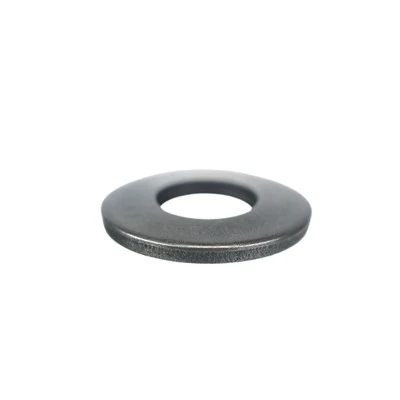
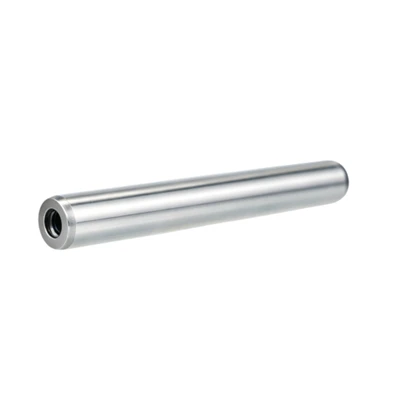
Material: Carbon Steel / Alloy Steel / Stainless Steel
Outer Diameter:...
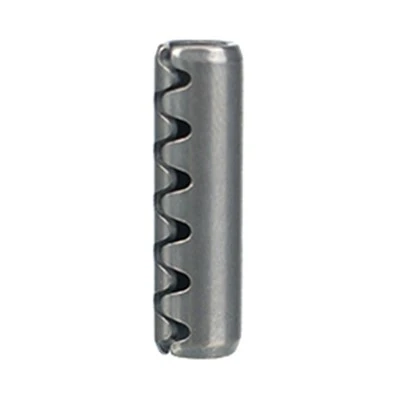
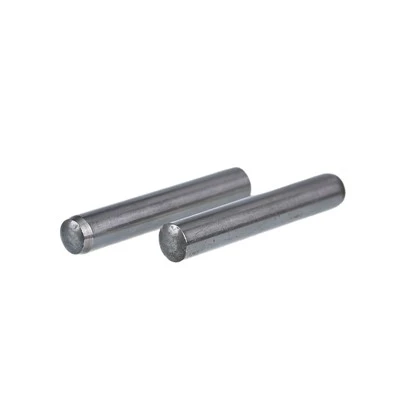
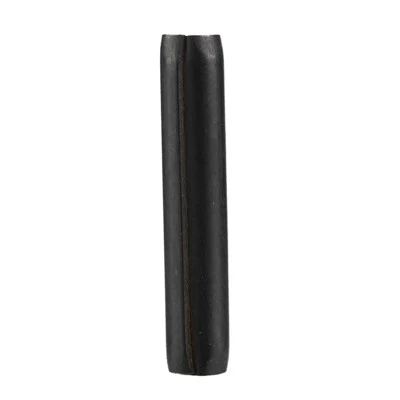
Design: Multi-Coil Spiral Structure for Controlled Elasticity...

Material: Spring Steel / Stainless Steel
Duty Type: Heavy Duty
Diameter:...