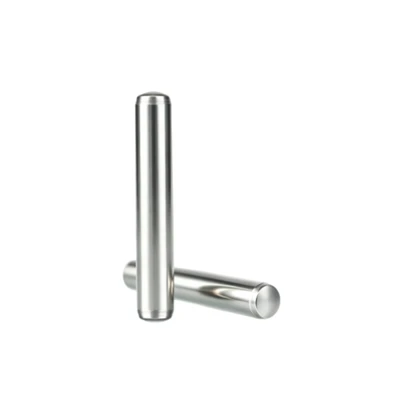

Inner Circlip Technical Specifications
| Parameter | Specification |
|---|---|
| Standard | DIN 472 |
| Type | Internal Retaining Ring |
| Size | Metric / Custom |
| Material | Spring Steel / Stainless Steel |
| Bore Diameter | Standard / Custom |
| Ring Thickness | Standard / Custom |
| Groove Diameter | Standard / Custom |
| Groove Width | Standard / Custom |
| Surface Treatment | Phosphating / Zinc Plating / Oil Finish / Custom |
Bore Groove & Circlip Fit
Proper dimensional matching between the Inner Circlip and the housing groove is essential for secure seating and reliable axial retention.
- Housing / Bore Diameter: Determines the appropriate Inner Circlip size for the assembly.
- Groove Diameter: Controls the radial seating position and engagement of the circlip.
- Groove Width & Depth: Must provide sufficient space for the ring section without excessive movement.
- Ring Thickness: Should correspond with the available groove space and required retaining position.
Inner Circlip Design & Retention
Internal Circlip is designed to fit into an internal groove machined in a bore or housing. Its open-ring structure provides elastic expansion during installation and radial engagement with the groove after seating.
- Internal Ring Structure: The open profile allows the ring to expand for insertion into the housing groove.
- Elastic Recovery: After installation, the ring returns toward its original shape to maintain contact with the groove.
- Groove Engagement: The ring seats against the internal groove shoulder to provide a defined axial stop.
- Axial Retention: Prevents bearings, gears, bushings, and other components from moving out of the housing or bore.

Material & Load Capacity
Internal Circlips are manufactured from spring steel or stainless steel grades like AISI 304/316, with wire or strip thickness selected based on bore diameter and expected axial load in shaft or housing assemblies.
Heat treatment processes such as quenching and tempering are applied to control hardness and elastic recovery, enabling the circlip to undergo radial deformation during installation without permanent plastic deformation.
In applications such as gearbox housings or electric motor casings, where operating temperatures typically range from ambient conditions up to approximately 150–250°C depending on material grade, the circlip maintains engagement within the bore groove while transferring axial shear load through the contact surface between ring section and groove wall.
Failure generally occurs when the groove edge wears beyond design tolerance or when applied axial load exceeds the shear capacity of the circlip cross-section, leading to loss of proper seating in the bore groove.
Custom Inner Circlip Manufacturing
We manufacture Circlips for standard and non-standard applications based on customer drawings, samples, or specified technical requirements.
- Custom Dimensions: Bore size, ring thickness, groove-related dimensions, and other critical dimensions can be customized.
- Material Options: Spring steel, stainless steel, and other specified materials are available.
- Drawing-Based Production: Manufacturing can follow customer drawings, samples, tolerances, and inspection specifications.
- OEM & Bulk Supply: Supports prototype orders, repeat production, and high-volume OEM requirements.
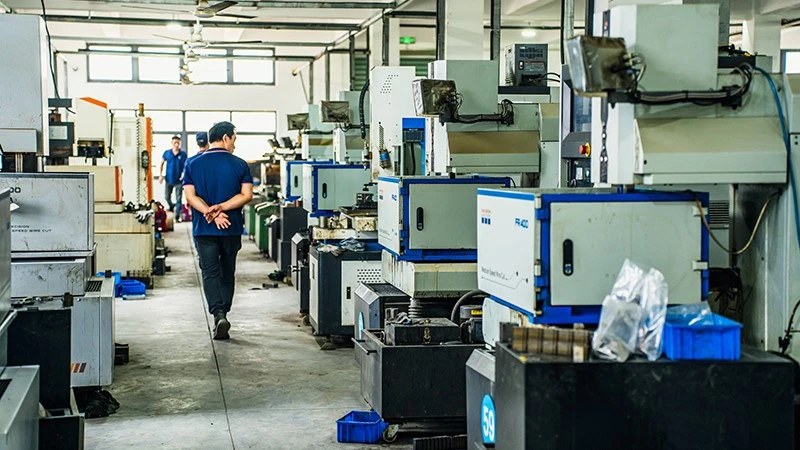
Inner Circlip manufacturer
As a manufacturer, we operate dedicated production equipment and controlled processes for stable output across different sizes and order volumes.
- Dedicated Production: Equipped for forming and stamping Internal Circlips with consistent ring geometry and dimensional repeatability.
- Process Control: Production parameters are monitored at key stages to reduce variation in ring diameter, thickness, and overall profile.
- Batch Consistency: Standardized tooling and production controls help maintain consistent dimensions across repeated manufacturing batches.
- Production Capacity: Supports sample development, regular production, and high-volume OEM orders with organized production scheduling.
FAQ
Why does part of a retaining ring show good elasticity while another part is weak?
Uneven elasticity is usually caused by localized decarburization of the raw material surface or furnace atmosphere exposure during heat treatment, where oxygen enters the furnace and affects surface carbon content. Improper loading or stacking on the conveyor belt can also lead to uneven heating, and in small-size parts, inconsistent quenching behavior (floating or uneven immersion in quenching medium) may result in partial elastic performance variation.
Why do retaining rings come off during operation?
Retaining rings may come off when axial loads exceed groove capacity, the ring is not fully seated in the groove, or dimensional and elasticity deviations reduce proper groove engagement. Incorrect installation can also lead to dislodgement during operation.
Why does one side of the surface finish look qualified while the other side shows spotting?
This issue is often related to contamination in the phosphating process, such as residual soap or oil in the turnover basket. During high-temperature treatment, these residues can decompose and float upward, then re-deposit onto the underside of the parts, resulting in uneven coating appearance and localized spotting on one surface side.
Why does a retaining ring lose elasticity?
Loss of elasticity is typically related to material selection and heat treatment conditions, such as incorrect steel grade, insufficient tempering time, or unstable microstructure after heat treatment. Improper mold design causing dimensional imbalance, inconsistent hardness distribution, or incorrect installation (excessive expansion for shaft-type rings or insufficient compression for bore-type rings) can also reduce spring performance.
Hot Tags: inner circlip, China inner circlip manufacturers, suppliers, factory, circlip lock inner, Inner Circlip, internal circlips