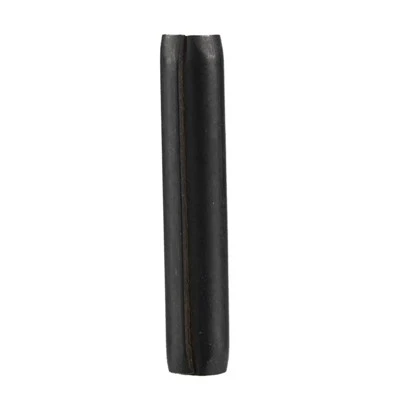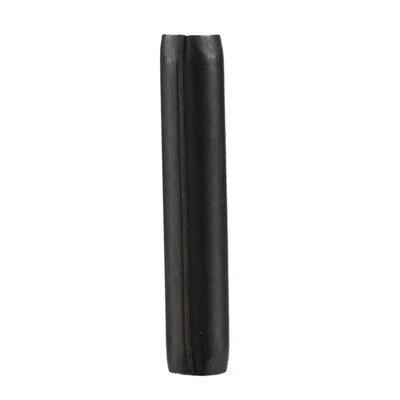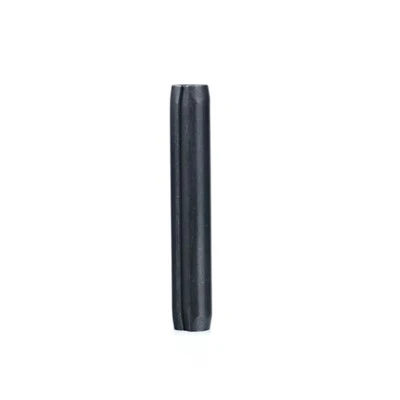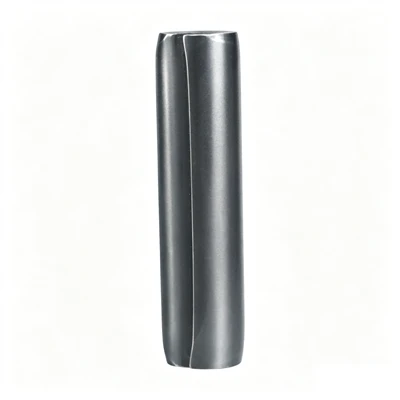

Specifications
|
Parameter |
Specification |
|---|---|
|
Standard |
DIN EN ISO 8751:2007 |
|
Product Type |
Coiled Spring Pin, Light Duty |
|
Structure |
Helically Coiled Multi-Layer Design |
|
Nominal Diameter |
1.5–8 mm |
|
Length |
As specified in ISO 8751 |
|
Material |
Carbon Steel / Austenitic Stainless Steel / Martensitic Stainless Steel |
|
End Type |
Chamfered Ends |
|
Surface Finish |
Natural Finish; Protective Lubricant for Steel |
|
Customization |
Non-standard dimensions subject to agreement |
Multi-Layer Coiled Structure & Elastic Performance
- ISO 8751 coiled spring pins feature a helically rolled structure consisting of multiple concentric layers of spring steel strip. Unlike slotted spring pins, the coiled construction has no longitudinal slot, allowing the pin to distribute radial forces around its circumference.
- During installation, the layered structure compresses to accommodate the mounting hole. Once inserted, the spring material generates outward radial pressure against the hole wall. This elastic response helps maintain pin retention while accommodating minor variations in hole dimensions and assembly conditions.
- The multi-layer design also distributes contact forces across the pin body, supporting consistent engagement between the pin and the surrounding component.


Light Duty Design & Retention Performance
- ISO 8751 specifies light-duty coiled spring pins designed for mechanical assemblies with corresponding retention and load requirements. Their flexible construction allows the pin to adapt to the mounting hole during insertion while maintaining contact pressure after installation.
- The light-duty configuration is suitable for applications where component positioning, connection stability, and controlled fastening forces are required. Its selection should consider the pin diameter, length, mounting hole dimensions, material properties, and operating loads.
- For assembly design, the required retention performance depends on the interaction between the pin and the surrounding material. Proper hole preparation and dimensional matching are therefore important for achieving the intended fitting condition.
Material Selection & Hardness Requirements
|
Material Category |
Material Characteristics |
Hardness Requirement |
Typical Selection Considerations |
|---|---|---|---|
|
Carbon Spring Steel |
Heat-treated spring steel with elastic properties and mechanical strength |
420–545 HV |
General mechanical fastening and component retention |
|
Austenitic Stainless Steel |
Corrosion-resistant stainless steel with work-hardened properties |
According to material condition specified in the standard |
Assemblies requiring corrosion resistance |
|
Martensitic Stainless Steel |
Heat-treatable stainless steel with higher hardness and strength |
460–560 HV30 |
Applications requiring a combination of hardness and corrosion resistance |
Customization & Manufacturing Capability
Customized Dimensions
Pin diameter and length can be evaluated according to assembly drawings and application requirements. Buyers can provide dimensional specifications to confirm product suitability before ordering.
Material Selection
Material options include carbon spring steel, austenitic stainless steel, and martensitic stainless steel, subject to the applicable specifications. Material selection can be discussed according to required mechanical properties and operating environments.
Product Specification & Technical Support
We assist buyers in confirming pin dimensions, material categories, hardness requirements, and applicable standards. Technical drawings and product specifications can be reviewed to help reduce dimensional mismatches during component selection.
OEM Orders & Bulk Supply
Anhui Pins supports bulk purchasing requirements for fastener distributors, equipment manufacturers, and OEM assembly projects. Order specifications, quantities, and packaging requirements can be discussed according to individual procurement needs.
In-Process Inspection & Quality Control


Anhui Pins focuses on dimensional consistency and material conformity throughout the production of ISO 8751 coiled spring pins. In-process inspection helps identify deviations during manufacturing and maintain compliance with the applicable product specifications.
1. Raw Material Inspection
Incoming spring steel materials are checked against specified material grades and procurement requirements. Material identification and condition are reviewed before production to ensure suitability for the required pin specifications.
2. Coiling Process Inspection
During the forming process, the helical structure, layer arrangement, and overall pin shape are checked. Inspection focuses on the consistency of the coiled construction and the condition of the pin body.
3. Dimensional Inspection
Key dimensions, including outside diameter, pin length, and material thickness, are checked against the applicable ISO 8751 requirements. Dimensional verification helps maintain consistency between production batches and the specified mounting conditions.
4. Finished Product Inspection
Finished pins are checked for appearance, dimensional conformity, and applicable mechanical requirements. Hardness and double shear strength are evaluated according to the relevant material category and product specifications before acceptance.
FAQ
Can coiled spring pins be removed and reused?
Reuse depends on the pin's condition and the requirements of the assembly. Removal may cause permanent deformation or affect its elastic properties. For safety-critical or load-bearing connections, replacing the pin is generally preferable.
Can I replace a slotted spring pin with a coiled spring pin?
Not always. These two pin types have different structures and deformation characteristics. Before substitution, check the mounting hole dimensions, retention requirements, mechanical loads, and available installation space.
Does the installation direction affect pin performance?
The installation direction should follow the assembly design and applicable installation recommendations. Proper alignment helps prevent damage to the pin and surrounding components during insertion.
What causes a coiled spring pin to become loose after installation?
Possible causes include an oversized or worn mounting hole, incorrect pin selection, insufficient engagement, or repeated loading beyond the intended application conditions. Checking the hole condition and joint design can help identify the cause.
Can coiled spring pins be used in assemblies exposed to vibration?
They can be considered for mechanical assemblies subject to vibration because their elastic structure maintains radial contact with the mounting hole. However, suitability depends on vibration intensity, load direction, joint design, and operating conditions.
Hot Tags: iso 8751 coiled spring pins, China iso 8751 coiled spring pins manufacturers, suppliers, factory, carbon steel coiled spring pins, coiled pin, Coiled Roll Pins, coiled spring pins for machinery, spiral tension pin, steel spring pin