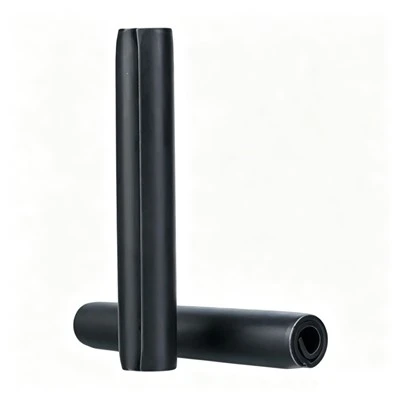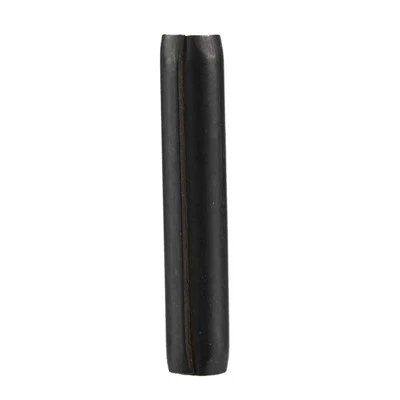

Specifications
|
Parameter |
Specification |
|---|---|
|
Standard |
DIN EN ISO 8751:2007 |
|
Nominal Diameter |
1.5–8 mm |
|
Material |
Steel, Austenitic Stainless Steel, Martensitic Stainless Steel |
|
Design |
Helically Coiled, Multi-Layer |
|
End Type |
Chamfered by Pressing |
|
Hole Tolerance |
H12 |
|
Surface Condition |
Natural Finish / Protective Lubricant |
|
Hardness |
According to Material Specifications |
|
Shear Strength Test |
ISO 8749 |
|
Length Tolerance |
L≤10: ±0.25 mm; 10–50: ±0.5 mm; 50–200: ±0.75 mm |
Light Duty Design & Retention Performance
Radial Retention Force
When compressed inside the receiving hole, the pin generates outward radial pressure. This contact force creates frictional resistance that helps prevent unwanted axial displacement during normal operation.
Light-Duty Load Adaptation
The lighter construction is intended for connections with comparatively lower shear load requirements. Pin diameter, material, and joint configuration should be considered when evaluating load suitability.
Component Positioning & Alignment
The cylindrical profile provides a locating function between assembled components, helping maintain their relative positions and restrict unintended movement within mechanical assemblies.
Flexible Press-Fit Installation
The multi-layer coiled structure accommodates radial compression during insertion into the specified hole. Proper hole dimensions and alignment help achieve the intended interference fit and retention performance.
Shear Strength & Mechanical Performance
The shear strength of Light Duty Coiled Spring Pins is an important consideration when selecting pins for mechanical joints subjected to transverse loading. Their load-bearing capacity depends on nominal diameter, material grade, pin construction, and the configuration of the connected components.
- Single Shear Performance: In single-shear assemblies, the pin is subjected to shear force across one shear plane. The corresponding load capacity should be evaluated according to the specified pin diameter and material.
- Double Shear Performance: When the joint configuration creates two shear planes, the applied load is distributed across two sections of the pin. Actual capacity depends on joint geometry and load distribution.
- Material-Dependent Strength: Different steel grades provide different mechanical characteristics. Material selection directly influences the pin's resistance to shear deformation and failure.
- Shear Testing & Verification: Shear strength can be evaluated according to ISO 8749 testing procedures to verify whether the supplied pins meet the applicable mechanical requirements.
Material Selection & Hardness Requirements
Light Duty Coiled Spring Pins are available in different steel material categories to accommodate varying mechanical and environmental requirements. Material selection should consider the required shear performance, corrosion exposure, and operating conditions.
|
Material Type |
Material Characteristics |
Selection Considerations |
|---|---|---|
|
Carbon Steel |
Provides mechanical strength and is suitable for general fastening applications |
Applications requiring standard mechanical performance and cost-conscious material selection |
|
Austenitic Stainless Steel |
Offers corrosion resistance and good ductility |
Assemblies exposed to moisture or mildly corrosive environments |
|
Martensitic Stainless Steel |
Provides higher hardness potential and strength through appropriate heat treatment |
Applications requiring increased hardness and mechanical strength |
Quality Control & Inspection Process

Raw Material & Composition Verification
Incoming spring steel materials are checked against specified material requirements before production. Spectrometer analysis can be used to verify chemical composition and identify material grades, helping ensure consistency between supplied materials and production specifications.

Dimensional & Geometric Inspection
Critical dimensions are inspected using precision measuring instruments and optical measurement systems. Inspection focuses on nominal diameter, pin length, roundness, and end chamfer geometry to verify dimensional conformity with DIN EN ISO 8751 requirements.

Hardness & Shear Strength Testing
Hardness testing is conducted to evaluate the mechanical condition of the selected steel material. Shear testing according to ISO 8749 is used to assess the pin's resistance to transverse loading and verify its mechanical performance against applicable requirements.

Surface Inspection & Automatic Sorting
Finished pins undergo visual and dimensional screening to identify burrs, cracks, surface defects, and dimensional deviations. Automated optical sorting equipment can separate non-conforming pieces, while batch inspection records support product traceability before packaging.
FAQ
What is the difference between light-duty and heavy-duty coiled pins?
The main difference lies in their intended load capacity and construction specifications. Light-duty versions are generally selected for assemblies with lower mechanical load requirements, while heavy-duty versions are designed for applications requiring greater load-bearing capacity. The final choice should be based on the joint design and specified mechanical requirements.
How do I determine the correct pin length for my application?
Pin length should be determined by the combined thickness of the components being joined and the required engagement depth. Buyers should also consider whether the pin needs to remain flush with the component surface or extend beyond it.
Can these pins be used in blind holes?
Yes, they can be used in blind-hole assemblies if sufficient hole depth is provided. The hole should allow the pin to reach its intended installation position without bottoming out prematurely.
Are these pins suitable for automated assembly lines?
They can be incorporated into automated press-fitting processes. Consistent component dimensions, proper feeding orientation, and controlled insertion force are important considerations when integrating them into automated equipment.
Hot Tags: light duty coiled spring pins, China light duty coiled spring pins manufacturers, suppliers, factory, coiled pin, coiled spring pins for assemblies, Coiled Spring Pins ISO 8748, coiled spring pins stainless steel, coiled tension pins, Spiral Spring Pins