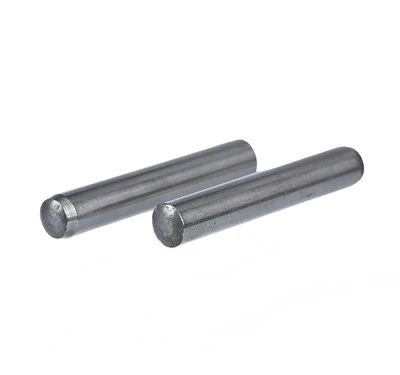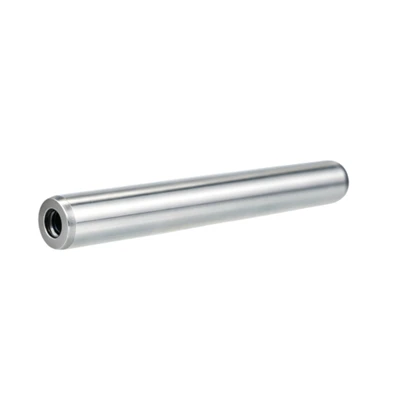
DIN 7979 parallel pins with internal thread are precision locating components used to align and position parts in machinery, tooling, fixtures, and mechanical assemblies. Their cylindrical bodies provide the locating fit, while the internal thread at one end allows an extraction screw or tool to engage with the pin during disassembly.
For machinery manufacturers, mold and fixture builders, and industrial fastener distributors, selecting these pins requires attention to nominal diameter, length, tolerance, internal thread dimensions, material, heat treatment, and surface condition. Type C and Type D also have different material and hardness requirements, which should be specified before requesting a quotation.
China has several suppliers offering internally threaded parallel pins and related precision fasteners. This article introduces five companies for supplier comparison and outlines the technical details to confirm before placing an order.

Top 5 DIN 7979 Parallel Pins With Internal Thread Manufacturers in China
|
Company |
Relevant Product Information |
|---|---|
|
Anhui Pins Metal Products Co., Ltd. |
Parallel pins, internally threaded dowel pins, customized metal components |
|
Shanghai Sea Song Co., Ltd. |
DIN 7979D pins, carbon steel, bearing steel, stainless steel |
|
Shanghai Eastern Waves Co., Ltd. |
DIN 7979 parallel dowel pins, carbon steel, customized sizes |
|
Suzhou Bo Zuan Jinggong Technology Co., Ltd. |
DIN 7979 internally threaded parallel pins, stainless steel options |
|
Yangzhou Worskey Metal Products Co., Ltd. |
DIN 7979 hardened steel and stainless steel internally threaded pins |
Anhui Pins Metal Products Co., Ltd.
Anhui Pins Metal Products Co., Ltd. is based in Quanjiao County, Chuzhou, Anhui Province. The company began its business in Jiaxing, Zhejiang, in 2017 and relocated to Anhui in 2021. Its product portfolio includes solid dowel pins, parallel pins with internal thread, slotted spring pins, coiled spring pins, retaining rings, compression limiters, washers, trim clips, and customized metal stamping components.
For precision metal component projects, PINES coordinates production with specialist partner factories. Related processing capabilities include precision stamping, CNC machining, heat treatment, and surface finishing. This arrangement allows different manufacturing requirements to be coordinated according to component drawings and agreed specifications.
Customization and project support include:
- Drawing review: Check pin diameter, length, tolerance zones, internal thread dimensions, and assembly requirements.
- Material coordination: Review Type C and Type D material requirements and discuss alternative materials where the project permits.
- Heat-treatment coordination: Confirm the required hardened condition and hardness range for Type D pins.
- Sample development: Arrange samples for dimensional inspection, thread engagement checks, and installation testing.
- Quality supervision: Coordinate inspection against approved drawings and agreed acceptance criteria.
- Order coordination: Confirm packaging, batch identification, and delivery arrangements for customized and repeat orders.
For DIN 7979 projects, PINES can support OEM requirements involving standard dimensions, special lengths, material selection, hardness specifications, and internal thread details. The company works with machinery manufacturers, tooling suppliers, and industrial fastener distributors on customized metal component requirements.


Shanghai Sea Song Co., Ltd.
Shanghai Sea Song Co., Ltd. supplies industrial fasteners, including retaining rings, washers, spring pins, dowel pins, taper pins, and parallel pins. Its product listings include DIN 7979D internally threaded parallel pins with m6 tolerance. Listed material options include bearing steel GCr15, carbon steel grades such as C35 and C45, and stainless steel. Plain, plated, and black surface finishes are also listed.
Shanghai Eastern Waves Co., Ltd.
Shanghai Eastern Waves Co., Ltd. supplies industrial fasteners, including DIN 7979 parallel dowel pins with internal thread. Its product information includes carbon steel pins, customized dimensions, and lengths from 10 mm to 200 mm or according to customer requirements. The company also lists other standard pins and special fasteners made from drawings or samples.
Suzhou Bo Zuan Jinggong Technology Co., Ltd.
Suzhou Bo Zuan Jinggong Technology Co., Ltd. lists DIN 7979 internally threaded parallel pins with a stated size range of 6.0–80.0 mm. Its product information identifies stainless steel as a material option and mentions customized orders. Packaging options include plastic bags, EPE materials, trays, cartons, and pallets.
Yangzhou Worskey Metal Products Co., Ltd.
Yangzhou Worskey Metal Products Co., Ltd. offers DIN 7979 internally threaded pins in hardened steel and stainless steel product listings. Its published product information includes different material and surface treatment options, including polishing and passivation. Specific DIN 7979 dimensions and hardness requirements should be confirmed for each order.
What Are DIN 7979 Parallel Pins With Internal Thread?
A DIN 7979 parallel pin has a cylindrical body designed to locate and align two or more components. Unlike a standard parallel pin, it includes an internal thread at one end. A compatible screw or extraction tool can engage with this thread to withdraw the pin during equipment maintenance or assembly adjustment.
The internal thread is primarily an extraction feature rather than the main fastening connection. The cylindrical body performs the locating function, while the threaded end provides a controlled removal point.
Key structural features include:
- Ground cylindrical body: Provides the specified diameter and fit for locating mating components.
- Internal thread: Allows an extraction screw or tool to engage with the pin.
- Thread entry: The opening geometry helps guide the extraction screw into the internal thread.
- Centering feature: The pin end geometry supports alignment during installation.
- Material condition: Type C and Type D have different material and heat-treatment requirements.
DIN 7979 includes Type C and Type D designs. These types should be distinguished when specifying material, hardness, and mechanical requirements.
DIN 7979 Parallel Pins With Internal Thread Specifications
The following specifications are based on the DIN 7979 product information.
|
Parameter |
Specification |
|---|---|
|
Standard |
DIN 7979:1977 |
|
Design Types |
Type C / Type D |
|
Nominal Diameter |
6–80 mm |
|
Diameter Tolerance |
m6 (standard table) |
|
Internal Thread |
M4–M42, depending on nominal diameter |
|
Type C Material |
9SMnPb28K, according to DIN 1651 |
|
Type D Material |
Steel, tensile strength ≥ 600 N/mm² |
|
Type D Heat Treatment |
Quenched |
|
Type D Hardness |
60 ± 2 HRC |
|
Surface Roughness |
Rz 4 |
|
General Dimensional Tolerances |
DIN 7168, Class C, for dimensions without specified tolerances |
|
Customization |
Other materials and tolerance zones by agreement |
Type C and Type D: What Is the Difference?
|
Item |
Type C |
Type D |
|---|---|---|
|
Material |
9SMnPb28K steel according to DIN 1651 |
Steel meeting the specified tensile strength requirement |
|
Heat Treatment |
Unhardened |
Quenched |
|
Hardness |
No specific hardness value stated in the supplied product information |
60 ± 2 HRC |
|
Selection Consideration |
Applications requiring precision positioning without the specified hardened condition |
Applications requiring a hardened pin surface and specified hardness |
The two types should not be treated as interchangeable. The drawing or purchase specification should identify the required type, material condition, and hardness where applicable.
What Dimensions Should Be Confirmed Before Ordering?
The nominal diameter alone is not enough to define an internally threaded parallel pin. The cylindrical body, pin length, internal thread, and mating-hole dimensions must work together in the assembly.
The main dimensions to confirm are:
- Pin diameter: Specify the nominal diameter and required m6 tolerance.
- Pin length: Confirm the finished length based on component thickness and installation depth.
- Internal thread size: Match the thread designation to the intended extraction screw or tool.
- Thread depth: Confirm the usable engagement depth, not only the nominal thread size.
- Hole fit: Specify the mating-hole tolerance according to the required locating fit.
- End geometry: Confirm the centering feature, thread entry, and other drawing-defined details.
A pin with the correct nominal diameter may still be unsuitable if its internal thread is too shallow for the extraction tool or its length does not provide the required engagement. The complete drawing should therefore be reviewed before production.
How to Check Material and Hardness Requirements?
Material selection depends on the specified DIN 7979 type and the operating conditions of the assembly.
For Type C, the listed material is 9SMnPb28K steel according to DIN 1651. The supplied product information does not state a specific hardness value for this type. Type D uses steel with a tensile strength of at least 600 N/mm² and a quenched condition, with hardness specified at 60 ± 2 HRC.
For Type D orders, the inspection requirements should include:
- Material grade or applicable material specification.
- Heat-treatment condition.
- Hardness test results.
- Dimensional inspection after heat treatment.
- Surface condition and visible defect inspection.
Hardness should not be used as the only acceptance criterion. Material documentation and dimensional results are also needed to verify that the pin matches the approved specification.
What Should Be Included in a DIN 7979 RFQ?
A detailed request for quotation helps suppliers identify the correct pin type and avoid differences in material, thread dimensions, or inspection scope.
|
RFQ Item |
Information to Provide |
|---|---|
|
Standard |
DIN 7979 |
|
Design Type |
Type C or Type D |
|
Nominal Diameter |
Required diameter in mm |
|
Pin Length |
Finished length in mm |
|
Diameter Tolerance |
m6 or another agreed tolerance zone |
|
Internal Thread |
Thread size and required depth |
|
Material |
9SMnPb28K, specified steel, or approved alternative |
|
Heat Treatment |
Required condition for Type D |
|
Hardness |
60 ± 2 HRC for Type D, where applicable |
|
Surface Roughness |
Rz 4 or drawing-specific requirement |
|
Quantity |
Sample quantity and estimated bulk quantity |
|
Inspection |
Dimensional, thread, material, and hardness checks |
|
Packaging |
Bulk, separated, labeled, or customized packaging |
A technical drawing should accompany the RFQ whenever the pin includes non-standard dimensions or thread requirements. An existing sample can also help clarify end geometry and extraction-tool compatibility.
After the drawing review, the supplier can coordinate sample development. The sample should be checked for diameter, length, thread engagement, and installation fit before the final specification is approved for bulk production.
How to Inspect DIN 7979 Pins Before Bulk Delivery?
Inspection should cover both the locating body and the internal thread. A pin may meet its nominal diameter requirement but still cause assembly or maintenance problems if the thread is damaged or the pin length is inconsistent.
The following checks can be included in a batch inspection plan:
- Diameter measurement: Check the cylindrical body against the specified m6 tolerance.
- Length measurement: Verify the finished length and applicable dimensional tolerances.
- Thread inspection: Use suitable thread gauges to check internal thread size and engagement condition.
- Hardness testing: For Type D, verify the specified 60 ± 2 HRC range.
- Surface inspection: Check for scratches, cracks, burrs, corrosion, and damage around the thread entry.
- Surface roughness verification: Confirm Rz 4 when this requirement applies to the order.
- Installation testing: Test sample pins in the specified mating holes and verify removal using a compatible extraction tool.
Before bulk production, the supplier and customer should agree on inspection methods, sampling frequency, acceptance limits, and the records to be provided. These requirements are particularly important for repeat orders used in interchangeable machinery assemblies.
How Does the Internal Thread Affect Installation and Maintenance?
The internal thread makes the pin easier to remove during equipment maintenance or assembly adjustment. During installation, the cylindrical body provides the locating fit. During disassembly, a compatible screw or extraction tool engages with the internal thread and applies pulling force to withdraw the pin.
Three details deserve attention:
- Thread compatibility: The extraction screw must match the pin's internal thread size and pitch.
- Engagement depth: The screw should engage sufficiently without bottoming out or damaging the internal thread.
- Removal method: Use a suitable puller or extraction tool rather than applying uncontrolled force to the surrounding component.
This design is useful in fixtures, molds, machine assemblies, and other equipment where locating pins may need to be removed for adjustment, replacement, or maintenance.