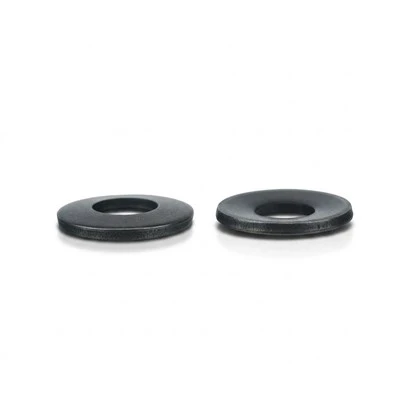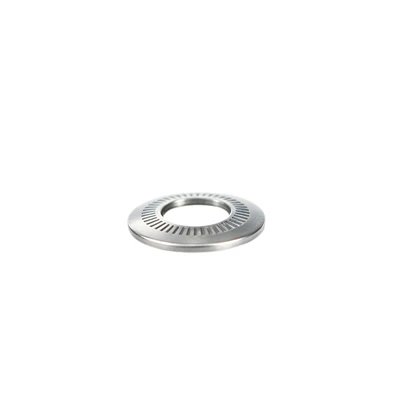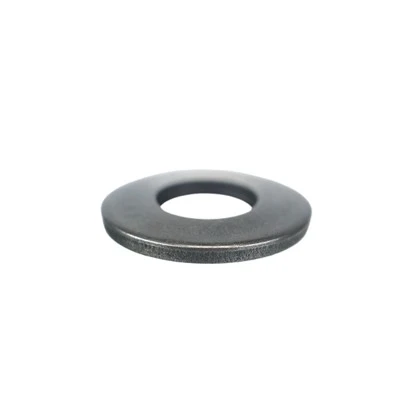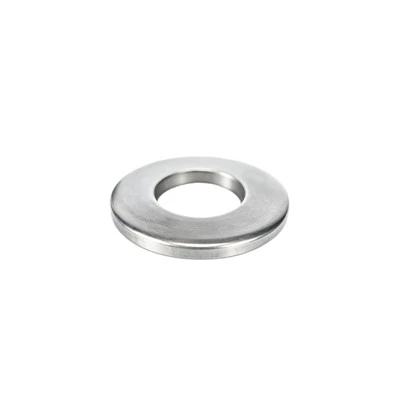

Technical Specifications
|
Parameter |
Specification |
|---|---|
|
Standard |
DIN 6796 |
|
Washer Type |
Conical Spring Washer |
|
Design |
Conical Disc Shape |
|
Nominal Thread Size |
M2–M30 |
|
Material |
Spring Steel |
|
Hardness |
420–490 HV |
|
Heat Treatment |
Hardened and Tempered |
|
Surface Finish |
According to customer requirements |
|
Application |
Bolted Connections |
|
Customization |
Dimensions, Materials, Surface Finishes, Packaging |
Load Performance & Bolted Joint Compensation
The load performance of DIN 6796 conical spring washers is determined by their axial spring characteristics and installed compression conditions. They provide additional elastic travel in bolted joints, helping accommodate minor dimensional changes caused by surface settling and contact deformation.
For engineering selection, the following factors should be considered:
- Axial Load: The applied clamping force must correspond to the washer's specified load characteristics.
- Compression Deflection: Installation compression should remain within the intended working range.
- Joint Settling: Elastic travel helps compensate for small changes in the clamped joint thickness.
- Assembly Conditions: Bolt size, mating surface geometry, and tightening procedure influence the actual working performance.
Selecting the appropriate washer specification requires consideration of the complete bolted joint rather than nominal thread size alone.
Dimensional Accuracy & Standard Compliance
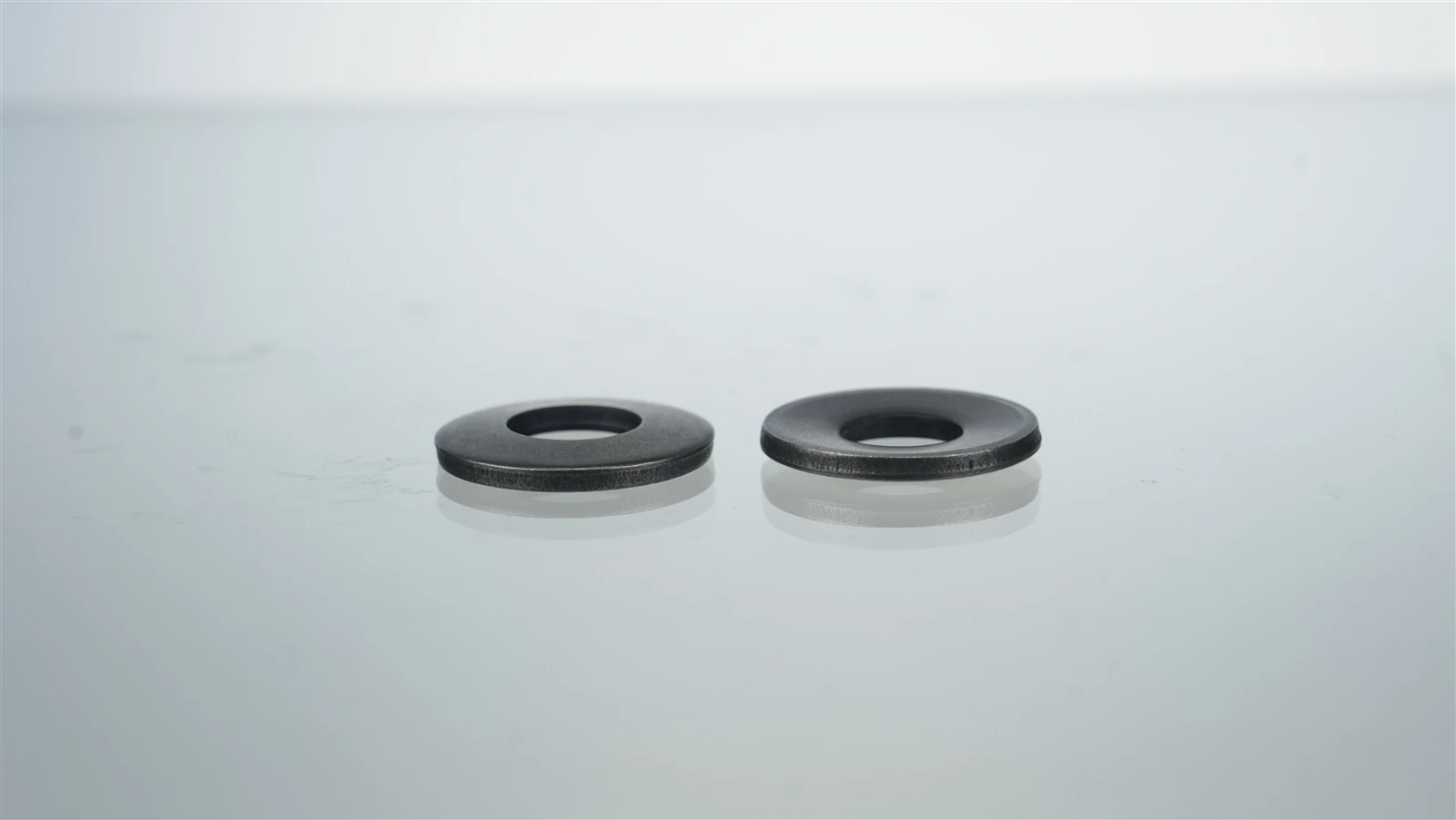
Dimensional consistency is essential for DIN 6796 conical spring washers because their geometry directly affects installation fit and load behavior. Production dimensions are controlled according to the applicable DIN 6796 requirements, covering the main geometric features of each nominal size.
Key inspection dimensions include:
- Inner Diameter (d1): Controls clearance around the corresponding bolt or threaded fastener.
- Outer Diameter (d2): Determines the washer's external bearing footprint.
- Thickness (s): Affects the material cross-section and deformation characteristics.
- Free Height (h): Defines the unloaded conical profile before installation.
- Geometric Consistency: Checks the washer's shape and dimensional uniformity across production batches.
Customization & Manufacturing Capability
Dimensional Customization
Inner diameter, outer diameter, washer thickness, and free height can be specified according to engineering drawings or assembly requirements, subject to manufacturing feasibility.
Conical Profile Adjustment
The cone height and disc geometry can be evaluated for specific compression requirements, ensuring the washer profile is compatible with the intended bolted assembly.
Material & Hardness Specifications
Spring steel selection and heat treatment requirements can be coordinated according to the required hardness range, mechanical properties, and applicable technical specifications.
Surface Treatment & Corrosion Protection
Surface finishes can be selected according to operating environments and corrosion protection requirements, with consideration given to coating thickness and its influence on washer dimensions.

DIN 6796 conical spring washer production involves several coordinated manufacturing stages to maintain dimensional consistency and product conformity. Each stage focuses on a specific aspect of the washer's geometry or mechanical properties.
Production Process:
1. Material Preparation: Spring steel is selected and prepared according to the specified material requirements and thickness.
2. Blanking & Forming: Washer blanks are produced and formed into the required conical disc profile.
3. Heat Treatment: Hardening and tempering are carried out to achieve the specified hardness range and mechanical characteristics.
4. Surface Finishing: Selected surface treatments are applied according to the order specification.
5. Final Inspection: Finished washers undergo dimensional, hardness, appearance, and other specified inspections before packaging.
FAQ
Can conical spring washers be installed in series or in parallel?
Yes. Multiple disc springs can be arranged in series or parallel depending on the required deflection and load characteristics. However, the resulting load-displacement behavior should be evaluated for the specific assembly configuration.
Should a washer be installed directly against a bolt head or nut?
It is generally installed beneath the bolt head or nut, with the bearing surfaces positioned against the adjoining components. The mating surfaces should be sufficiently flat and free from burrs that could interfere with seating.
Can these washers be reused after disassembly?
Reuse should not be assumed. A washer that has experienced excessive compression, permanent deformation, cracking, or visible surface damage should be replaced. Reuse decisions should follow the applicable assembly specifications.
Are conical spring washers suitable for applications involving temperature changes?
They can be considered for assemblies exposed to temperature fluctuations, but suitability depends on the spring steel grade, operating temperature, thermal cycling, and changes in the mechanical properties of the material.
Hot Tags: din 6796 conical spring washers, China din 6796 conical spring washers manufacturers, suppliers, factory, conical washer fasteners, DIN 6796 Conical Washer, Metal Conical Washer, slotted conical washers, Spring Conical Washer, tab lock washers