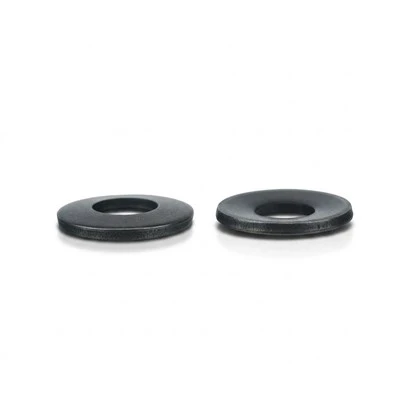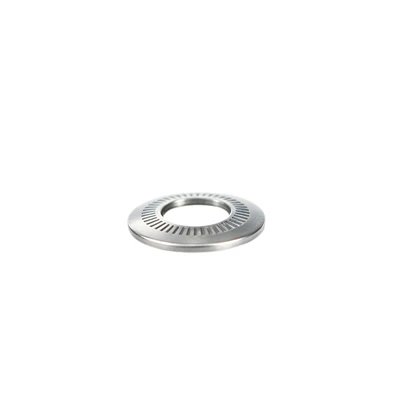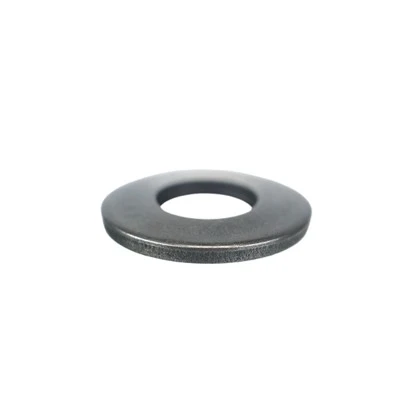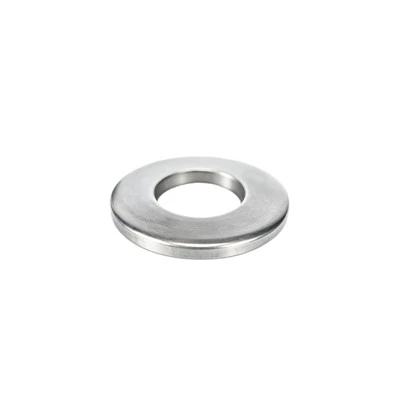

Technical Specifications
|
Parameter |
Series A |
Series B |
Series C |
|---|---|---|---|
|
Standard |
DIN EN 16983 |
DIN EN 16983 |
DIN EN 16983 |
|
Dimension Ratio (h₀/t) |
≈ 0.40 |
≈ 0.75 |
≈ 1.30 |
|
Diameter Ratio (De/t) |
≈ 18 |
≈ 28 |
≈ 40 |
|
Outer Diameter (De) |
8–250 mm |
8–250 mm |
8–250 mm |
|
Inner Diameter (Di) |
4.2–127 mm |
4.2–127 mm |
4.2–127 mm |
|
Thickness (t) |
0.4–14 mm |
0.3–10 mm |
0.2–7 mm |
|
Free Cone Height (h₀) |
0.2–14 mm |
0.25–7.8 mm |
0.25–7.8 mm |
|
Overall Free Height (l₀) |
0.6–19.6 mm |
0.55–17 mm |
0.45–14.8 mm |
|
Test Load (Ft) |
210–248,828 N |
118–119,050 N |
39–50,466 N |
|
Material |
Spring Steel |
Spring Steel |
Spring Steel |
|
Hardness |
42–52 HRC |
42–52 HRC |
42–52 HRC |
|
Heat Treatment |
Hardened and Tempered |
Hardened and Tempered |
Hardened and Tempered |
|
Surface Protection |
Phosphating and Oiling |
Phosphating and Oiling |
Phosphating and Oiling |
Load-Deflection Characteristics
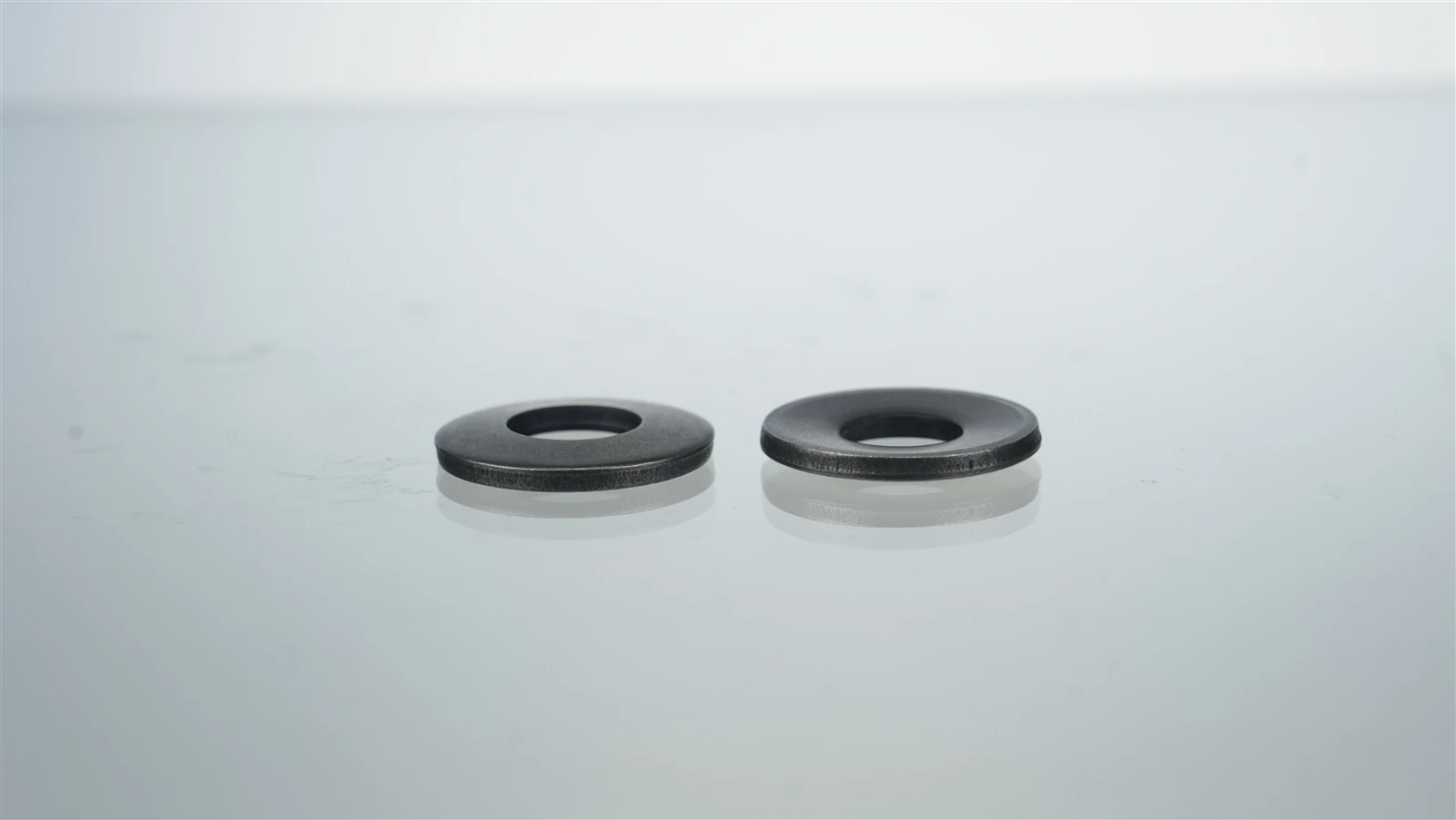
The load-deflection behavior of DIN EN 16983 Conical Spring Washers is determined by the disc geometry, material thickness, cone height, and material properties. As an axial load is applied, the disc spring undergoes controlled deformation, with the resulting spring force changing according to the compression displacement.
- Load at Specified Deflection: Spring force is evaluated at defined deflection points, allowing engineers to compare the actual load capacity under different compression conditions.
- Working Height Control: The installed height determines the compression displacement of the disc spring. Accurate working-height selection helps prevent excessive compression beyond the specified operating range.
- Spring Characteristic Curve: The load-deflection curve describes how axial force changes throughout the compression range. Its gradient is an important factor when assessing load variation during assembly operation.
- Stacking Configuration: Disc springs can be arranged in series, parallel, or combined configurations. Series arrangements increase total deflection, while parallel arrangements increase the overall load capacity.
Material & Heat Treatment
The mechanical performance of DIN EN 16983 disc springs depends on the chemical composition, hardenability, and heat-treatment condition of the selected spring steel. Material selection must correspond to the spring group and applicable material requirements specified by the standard.
Material Selection & Processing Requirements
- Spring Steel Grade: Material selection follows the applicable material specifications referenced by DIN EN 16983, including EN 10132-4, EN 10083, and EN 10089, depending on the specified material group.
- Hardening Process: Controlled heating and quenching develop the required hardness and strength of the spring material. Temperature control and cooling conditions need to be matched to the selected steel grade.
- Tempering Treatment: Tempering after hardening helps adjust the balance between hardness, strength, and toughness, reducing excessive brittleness in the finished component.
- Decarburization Control: Heat treatment must be controlled to limit surface carbon loss. The standard specifies a maximum decarburization depth of 3% of the spring thickness.
Manufacturing Process & Quality Inspection
Manufacturing DIN EN 16983 Conical Spring Washers requires control over forming accuracy, edge condition, heat-treatment consistency, and spring load performance. Inspection should cover both dimensional conformity and functional behavior to ensure that finished components meet the specified technical requirements.
Blanking & Cutting:
Spring steel is processed into disc blanks according to the required inner and outer diameters. Cutting accuracy and edge quality are controlled to minimize dimensional deviations.
Disc Forming:
The blanks are formed into the specified conical profile. Forming conditions are adjusted to maintain the required geometry and minimize uneven deformation.
Heat Treatment:
Hardened and tempered processing establishes the required mechanical properties, followed by hardness and surface-condition verification.
Surface Finishing:
Phosphating and oiling are applied according to the specified surface protection requirements. Surface coverage and finish consistency are checked before packaging.

Anhui Pins Metal Products Co., Ltd. supplies precision metal fastening components for industrial applications, with manufacturing and quality management processes covering material control, dimensional verification, mechanical testing, and batch inspection.
- Manufacturing & Production Management: Production is organized around controlled processing procedures, with attention to dimensional accuracy, forming consistency, and batch-to-batch uniformity.
- Material & Process Control: Spring steel materials are managed according to specified material requirements, with attention to material identification, heat-treatment condition, and surface protection.
- Technical Quality Inspection: Inspection covers key dimensions, thickness, free height, hardness, surface condition, and spring load at specified deflection points.
- Quality System & Traceability: Anhui Pins operates under IATF 16949:2016 and ISO 14001 management systems, supported by ERP-based production management and inspection records for process monitoring and batch traceability.
FAQ
What is the difference between a conical spring washer and a standard flat washer?
A flat washer primarily distributes clamping pressure and protects the contact surface. A conical spring washer has a dished profile that provides elastic deflection under axial compression. It can help compensate for small dimensional changes and maintain preload in bolted assemblies.
Can conical spring washers be installed in both directions?
Installation direction depends on the assembly design and the required contact arrangement. The orientation determines how the washer contacts adjacent components and how it deforms under compression. The specified installation position should therefore be followed rather than treating both orientations as interchangeable.
Can DIN EN 16983 disc springs be used in vibrating assemblies?
They can be used in certain assemblies exposed to vibration, provided the spring configuration, working deflection, preload, and fatigue requirements are properly evaluated. The washer should operate within its specified load-deflection range. It should not be assumed to prevent bolt loosening on its own.
Hot Tags: din en 16983 conical spring washers, China din en 16983 conical spring washers manufacturers, suppliers, factory, conical compression washers, DIN 6796 Conical Washer, Disc Spring Washer, external tooth conical washers, Heavy Duty Conical Washer, Stainless Steel Conical Washer