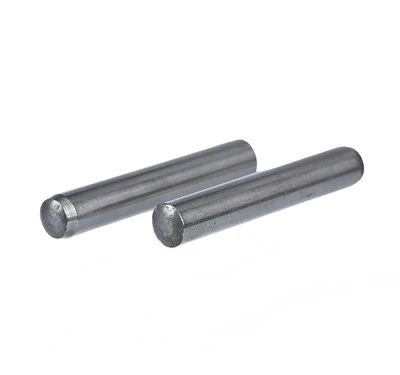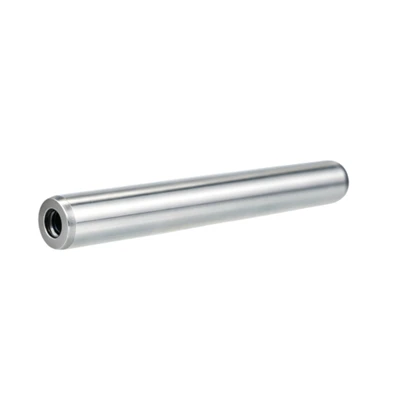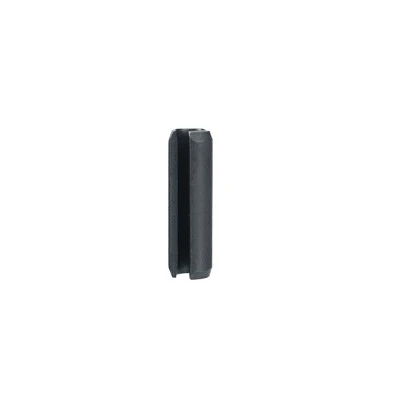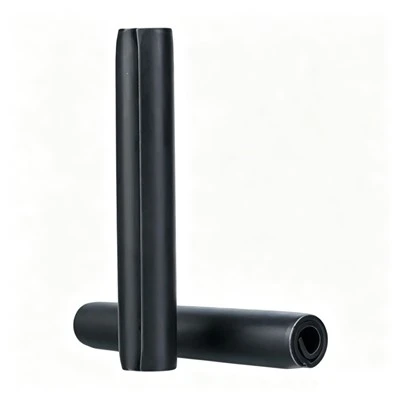
Solid dowel pins and spring pins are both used to locate, align, or connect mechanical components, but their structures and installation requirements are different. Solid dowel pins have a rigid, solid cylindrical body, while spring pins are designed to compress during installation and exert an outward force against the hole wall.
For engineers and purchasing teams, selecting between these two pin types requires consideration of hole tolerances, retention requirements, assembly methods, loading conditions, and maintenance needs. Choosing the wrong pin can lead to difficult installation, excessive hole wear, insufficient retention, or inconsistent positioning.

Understand the Difference Between Solid Dowel Pins and Spring Pins
Solid dowel pins rely primarily on precise dimensional fit to locate components, while spring pins use elastic deformation to accommodate the hole and maintain contact.
|
Comparison Factor |
Solid Dowel Pins |
Spring Pins |
|---|---|---|
|
Structure |
Solid cylindrical body |
Slotted, coiled, or otherwise compliant body |
|
Retention |
Determined by the specified fit and assembly design |
Provided partly by elastic radial force |
|
Hole Requirements |
Requires a controlled diameter and appropriate tolerance |
Hole size must match the specified spring pin design |
|
Installation |
Press-fit or clearance-fit installation, depending on application |
Typically pressed into a specified hole |
|
Positioning Accuracy |
Suitable for precision locating with appropriate tolerances |
Depends on pin design, hole condition, and application |
|
Typical Applications |
Precision fixtures, molds, and alignment assemblies |
General fastening, component retention, and mechanical joints |
Actual performance depends on pin design, material, dimensions, and installation conditions. Not every spring pin is interchangeable with another spring pin type, and solid dowel pins should not be substituted without checking the assembly requirements.
How Does Pin Structure Affect Fit and Retention?
Solid dowel pins provide a rigid locating surface. When manufactured to the required diameter tolerance, they can establish repeatable positioning between mating components.
In a typical locating arrangement, a pin may be press-fitted into one component and used to align a second component through a corresponding hole. The fit must be selected according to the materials, loads, and whether the assembly needs to be disassembled later.
Because solid pins do not compress like spring pins, hole diameter and alignment are particularly important during installation. An excessively tight fit can increase insertion force or damage the surrounding material, while an excessively loose fit may compromise retention or positioning.
Spring Pins: Elastic Deformation for Retention
Spring pins are designed to deform elastically as they enter a hole. Slotted spring pins compress across their slot, while coiled spring pins use a rolled strip structure that can accommodate radial compression.
This elastic behavior allows the pin to maintain contact with the hole wall and provide retention without relying exclusively on the same type of dimensional interference used for a solid pin. It can also accommodate certain variations in hole diameter within the manufacturer's specified limits.
However, spring pins still require correctly sized holes. If the hole is too small, installation force may become excessive or the pin may be damaged. If the hole is too large, retention may be insufficient.
What Hole Tolerances Should Buyers Consider?
Hole design is one of the most important factors when selecting a pin. Solid dowel pins and spring pins use different retention mechanisms, so their hole requirements should not be treated as equivalent.
For solid dowel pins, engineers typically specify the pin diameter tolerance and mating-hole tolerance together. The resulting fit determines whether the pin is fixed in place, removable, or allowed to move under the intended assembly conditions.
For spring pins, the hole diameter must follow the applicable pin specification. The pin's compressed dimensions, elastic range, and design type influence its behavior after installation.
Before ordering, buyers should confirm:
- Nominal pin diameter and length.
- Required pin and hole tolerances.
- Hole material and wall thickness.
- Required retention and removal conditions.
- Whether the hole is drilled, reamed, or produced by another process.
The specific tolerances should come from the engineering drawing or applicable product standard. A general rule of thumb is not sufficient for a precision assembly.
Compare Installation and Assembly Requirements
Solid dowel pins require the mating holes to be properly prepared and aligned. Where a press fit is specified, installation equipment and controlled force may be needed to avoid bending the pin, damaging the hole, or creating burrs.
For assemblies requiring accurate alignment, the location and perpendicularity of the holes are also important. Misaligned holes can cause difficult installation and introduce unwanted stress into the connected components.
Spring pins are generally installed by pressing them into a hole sized for the specific pin design. Their elastic structure allows them to compress during insertion, but the installation force still depends on the pin dimensions, material, hole size, and pin type.
A suitable press or guided installation tool can help prevent tilting and damage. Buyers should also check whether the design requires a particular insertion direction, edge condition, or minimum distance from the hole to the edge of the component.
In both cases, installation procedures should be consistent with the manufacturer's recommendations and the assembly drawing.
Which Pin Is Better for Different Applications?
The right choice depends on whether the main requirement is precise positioning, mechanical retention, or a combination of both.
|
Application Requirement |
Potentially Suitable Option |
Key Consideration |
|---|---|---|
|
Precise alignment between machined parts |
Solid dowel pin |
Diameter tolerance and hole fit |
|
Repeatable locating in fixtures or molds |
Solid dowel pin |
Positioning accuracy and wear |
|
Retention in a properly sized hole |
Spring pin |
Pin type, hole size, and retention force |
|
Compact mechanical connections |
Spring pin |
Available space and loading conditions |
|
Assembly requiring controlled disassembly |
Either type, depending on design |
Removal method and risk of hole damage |
|
Repeated impact or cyclic loading |
Application-dependent |
Fatigue, shear loads, material, and joint design |
Spring pins are not automatically better for impact or cyclic loading, nor are solid dowel pins always the more accurate choice. Coiled spring pins, slotted spring pins, and solid pins behave differently under load, so engineers should select the specific design based on its intended function.
What Should Buyers Check Before Ordering?
Purchasing teams should establish the technical requirements before requesting quotations. A pin that matches the nominal diameter but does not meet the fit, material, or loading requirements may cause assembly problems.
Confirm the required material grade, hardness, corrosion resistance, and surface treatment where applicable. Solid dowel pins may be specified in hardened or unhardened conditions, while spring pins require suitable material and elastic properties for their intended design.
Specify diameter, length, dimensional tolerances, and the relevant product standard or drawing. For spring pins, identify whether a slotted or coiled design is required because the structures and installation behavior differ.
Clarify whether the pin is primarily used for locating, retention, shear loading, or repeated assembly. Also consider temperature, moisture, corrosive exposure, and the materials of the connected components.
For precision or repeat-order projects, confirm dimensional inspection requirements, material documentation, and any necessary functional testing. Clear acceptance criteria help reduce discrepancies between samples and production batches.
Why Choose Pines for Pin Fastener Solutions?
Selecting the right pin involves more than matching diameter and length. Pines helps customers evaluate dowel pin requirements in relation to component alignment, hole fit, retention, and assembly conditions.
- Application-Oriented Selection: Consider the differences between solid dowel pins and spring pins to identify a suitable pin design for the intended mechanical connection.
- Dimensional Requirements: Review pin dimensions, tolerances, and drawing specifications to support proper fitting and assembly.
- Product Specification Support: Help clarify material, hardness, and surface requirements according to the application.
- Support for Industrial Projects: Work with customers to define product requirements for machinery components, fixtures, and other industrial assemblies.
Providing assembly drawings, hole dimensions, and operating conditions helps Pines better understand project requirements and determine the appropriate pin specifications.

Precision metal stamping

Heat treatment, quenching, and tempering

High-volume production support

Batch traceability management
FAQ
Not automatically. The replacement must be evaluated for hole fit, retention, loading, and assembly requirements.
They can accommodate installation through elastic compression, but insertion force and ease of installation depend on the pin design and hole dimensions.
Not in every application, but reamed holes are commonly used when tighter dimensional control and accurate positioning are required.
Reuse depends on the pin design, deformation, wear, and manufacturer's recommendations. A pin that has been damaged or permanently deformed should not be reused.
Provide the pin type, diameter, length, material, tolerance requirements, quantity, and relevant assembly or operating conditions.